𝘋𝘦𝘱𝘶𝘵𝘺 𝘗𝘳𝘪𝘮𝘦 𝘔𝘪𝘯𝘪𝘴𝘵𝘦𝘳 𝘏𝘰𝘯. 𝘝𝘪𝘭𝘪𝘢𝘮𝘦 𝘎𝘢𝘷𝘰𝘬𝘢 𝘰𝘱𝘦𝘯𝘴 𝘵𝘸𝘰-𝘥𝘢𝘺 𝘵𝘦𝘤𝘩𝘯𝘪𝘤𝘢𝘭 𝘷𝘢𝘭𝘪𝘥𝘢𝘵𝘪𝘰𝘯 𝘸𝘰𝘳𝘬𝘴𝘩𝘰𝘱 𝘪𝘯 𝘕𝘢𝘥𝘪.
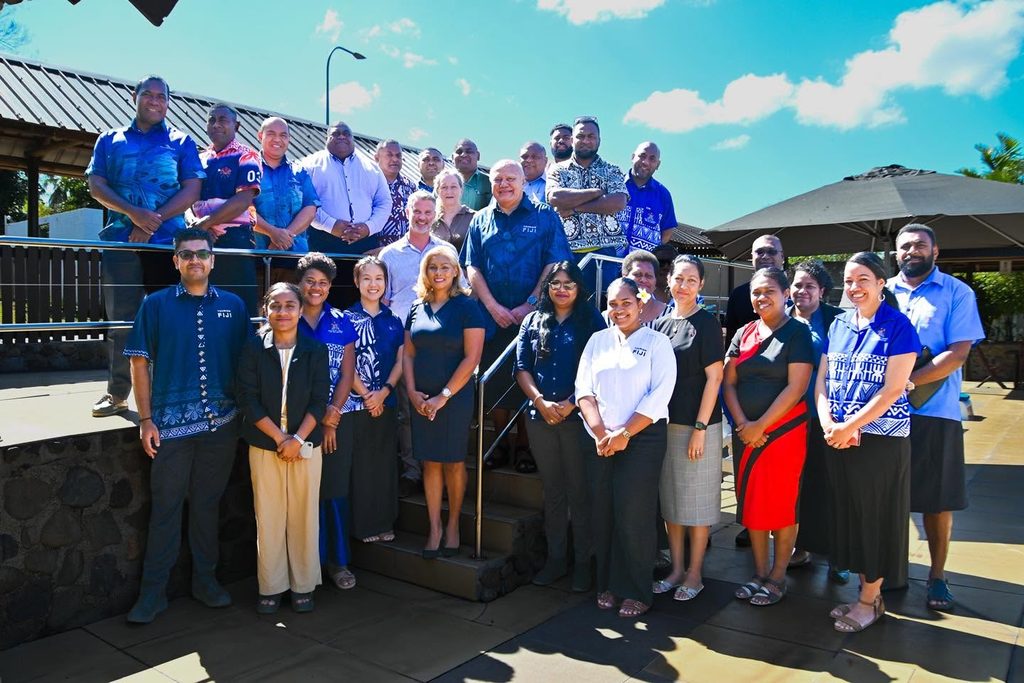
𝐍𝐀𝐃𝐈, 𝟏𝟒 𝐎𝐜𝐭𝐨𝐛𝐞𝐫 𝟐𝟎𝟐𝟔 – The Deputy Prime Minister and Minister for Tourism and Civil Aviation, Hon. Viliame Gavoka, today opened the National Tourism Risk Management and Crisis Communication Technical Validation Workshop at the Tanoa Skylodge Hotel in Nadi.
Over two days, Government officials and members of the tourism industry will review the Tourism Risk Management Framework and the Tourism Crisis Communication Framework and Toolkit before the documents are finalised.
Hon. Gavoka said tourism is one of the most important pillars of Fiji’s economy and also one of the sectors most exposed to risk. He pointed to cyclones and floods, the COVID-19 pandemic, disruptions to aviation and international travel, and recent global events that have affected fuel prices, airfares and travel confidence.
“Each of these experiences has reminded us that a disruption somewhere can quickly become a tourism issue here in Fiji,” Hon. Gavoka said.
He said the Frameworks build on resilience the sector has already shown, and that the aim is to strengthen the systems, partnerships and coordination arrangements that support tourism as a whole, so that resilience does not depend on individual businesses or communities managing a crisis on their own.
Hon. Gavoka said Government agencies, industry and communities have often responded to crises separately, within their own areas of responsibility. Existing mechanisms such as the Tourism Action Group and the Tourism Risk Mitigation Team give the sector a foundation for working together. The Frameworks will set out roles and responsibilities, how information is shared, how decisions are made and how the response is coordinated.
“We should not have to wait for the next major crisis to determine who needs to be at the table. We should know this beforehand, understand our respective roles, and be ready to act together,” Hon. Gavoka said.
The Deputy Prime Minister thanked the National Disaster Risk Management Office (NDRMO) for its engagement in reviewing and validating the Framework, and said tourism risks must be connected to national disaster risk management arrangements. He also acknowledged the Ministry’s partnership with the United Nations Development Programme (UNDP) through the Governance for Resilient Development in the Pacific programme (Gov4Res), which has supported the development of the Frameworks and tools.
Hon. Gavoka asked participants to test the Frameworks against real conditions: whether roles are clear, whether the coordination arrangements are practical,
whether there are gaps in crisis communication, and whether the Frameworks will work in a real emergency.
“We are not here simply to endorse a document. We are here to test it,” Hon. Gavoka said.
He said the final Frameworks must account for the capacity constraints of smaller tourism businesses and the vulnerabilities of outer islands and communities, and that the recommendations from the workshop will be reflected in the final Frameworks and operational tools.
– ENDS